logo
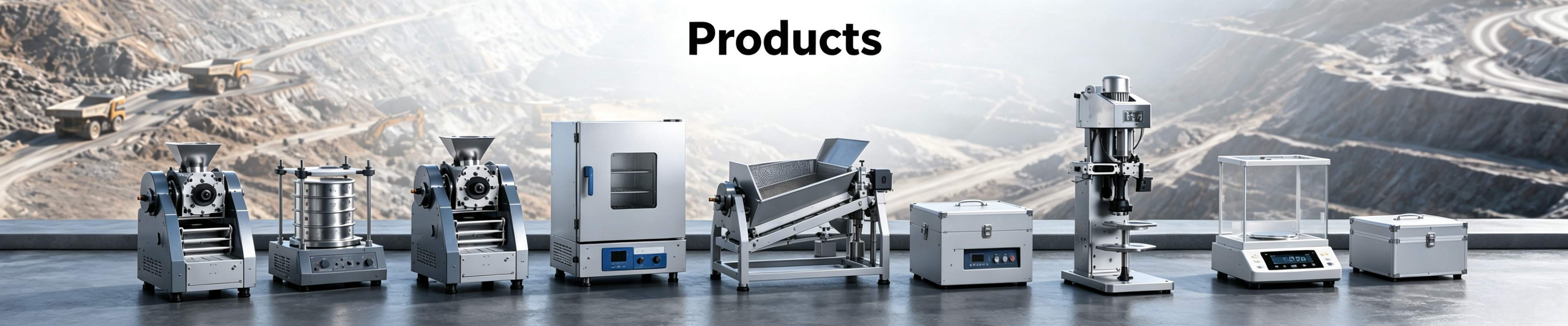
Products
PRODUCTS DETAILS
Home > Products >
XMB Series Laboratory Rod Mill for Mineral Ore Grinding and Beneficiation Test

XMB Series Laboratory Rod Mill for Mineral Ore Grinding and Beneficiation Test

MOQ: 1
Price: Negotiate
Standard Packaging: Cartons
Delivery Period: 1-3 working day
Payment Method: L/C,T/T
Detail Information
Place of Origin
China
Brand Name
Y&X
Model Number
XMB Series Rod Mill
Equipment Type:
Laboratory Rod Mill
Application:
Mineral Ore Testing
Grinding Method:
Wet & Dry Grinding
Capacity Range:
300g-5000g
Final Particle Size:
-0.074mm
Rotation Speed:
96-120 R/min
Motor Power:
0.25-0.55kW
Highlight:

laboratory rod mill for mineral grinding

,

XMB series ore beneficiation test mill

,

laboratory grinding mill with warranty

Product Description
XMB Series Laboratory Rod Mill for Mineral Ore Grinding and Beneficiation Test
The Laboratory Rod Mill is professional laboratory grinding equipment designed for mineral processing research, geological testing, mining laboratories and beneficiation experiments. This rod mill is mainly used for ore grindability tests, mineral sample preparation, artificial heavy sand preparation and fine grinding experiments.
The equipment uses steel rods as grinding media, which provides uniform grinding results and helps reduce over-grinding compared with conventional grinding methods. It is widely applied in the preparation process before flotation tests, gravity separation tests, chemical analysis and mineral evaluation.
With compact structure, stable operation and easy maintenance, the XMB Series Laboratory Rod Mill is an ideal choice for universities, research institutes, mining companies and mineral laboratories.
XMB Series Laboratory Rod Mill equipment overview
Main Features
  • Uniform Grinding Effect: The machine adopts steel rod grinding media. During operation, materials are crushed and ground through impact and friction between rods and ore particles, producing a more uniform particle size distribution.
  • Designed for Mineral Testing: The rod mill is specially developed for laboratory mineral processing experiments and can simulate industrial grinding conditions on a small scale.
  • Suitable for Wet Grinding: The equipment supports wet grinding operations, making it suitable for mineral beneficiation tests and flotation preparation.
  • Low Sample Contamination: The optimized grinding method reduces excessive crushing and helps maintain representative mineral samples for testing.
  • Compact Laboratory Structure: Small footprint, simple operation and convenient maintenance make it suitable for laboratories with limited space.
Working Principle
The XMB Laboratory Rod Mill works by rotating the cylindrical grinding drum at a controlled speed. Steel rods inside the drum are lifted and dropped during rotation. The ore samples are gradually ground through repeated impact and friction between the rods and materials.
By adjusting grinding time and operating conditions, different particle sizes can be obtained for subsequent mineral processing experiments. The ground samples can be used for:
  • Flotation tests
  • Gravity separation tests
  • Mineral analysis
  • Beneficiation research
Laboratory Rod Mill working principle diagram
Application Fields
Mining Industry
  • Gold ore testing
  • Copper ore testing
  • Iron ore testing
  • Lead-zinc ore testing
Research Institutions
  • Geological laboratories
  • Metallurgical laboratories
  • Universities
  • Mineral research centers
Mineral Processing Applications
  • Ore grinding tests
  • Beneficiation experiments
  • Flotation sample preparation
  • Mineral evaluation
Laboratory Rod Mill application in mineral processing
Why Choose Our Laboratory Rod Mill?
  • Accurate Laboratory Testing: The equipment provides stable grinding conditions to help researchers obtain reliable mineral processing test results.
  • Simulate Industrial Grinding Conditions: The laboratory-scale design allows users to evaluate grinding parameters before large-scale production.
  • Easy Operation: Simple structure and convenient operation reduce training requirements for laboratory users.
  • Stable Performance: High-quality mechanical structure ensures continuous and reliable operation during repeated testing.
Technical Parameters
Model XMBΦ160×200 XMBΦ200×240 XMBΦ240×300
Grinding Capacity 300-800 g 500-1000 g 1000-5000 g
Feed Size ≤2 mm ≤3 mm ≤3 mm
Output Particle Size -0.074 mm -0.074 mm -0.074 mm
Drum Speed 120 r/min 110 r/min 96 r/min
Motor Power 0.25 kW 0.55 kW 0.55 kW
Weight 90 kg 155 kg 180 kg
Safety & Operation Notes
Operator Training
Operators should receive proper equipment operation training and read the operation manual carefully before using the machine.
Safe Operation
Do not adjust, clean or repair the equipment while the machine is running. Always stop the equipment before inspection or maintenance.
Electrical Safety
The electrical system should be properly grounded. Leakage protection devices should be installed according to the working environment.
Avoid Overloading
Select suitable grinding capacity according to material characteristics to prevent motor overheating and equipment damage.
Regular Inspection
Check motor, transmission components and grinding parts regularly to ensure stable operation.
Maintenance Tips
  • Clean the grinding chamber after each test.
  • Check the wear condition of steel rods regularly.
  • Keep transmission parts properly lubricated.
  • Inspect electrical components periodically.
Packaging & Shipping
The XMB Series Laboratory Rod Mill is packed with protective materials to ensure safe delivery.
Packaging options:
  • Export wooden case
  • Moisture-proof protection
  • Steel frame reinforcement
Suitable for international transportation by sea, air and land.
Laboratory Rod Mill packaging and shipping
Frequently Asked Questions
Q1: What is the application of the laboratory rod mill?
The laboratory rod mill is mainly used for mineral ore grinding tests, beneficiation experiments and sample preparation before flotation or chemical analysis.
Q2: What minerals can be processed?
It can be used for gold ore, copper ore, iron ore and various metallic and non-metallic mineral samples.
Q3: What is the output particle size?
The standard output particle size can reach approximately -0.074mm depending on material properties and grinding conditions.
Q4: What is the difference between rod mill and ball mill?
Rod mills use steel rods as grinding media, which provides more uniform grinding and helps reduce excessive fine particle production.
Q5: Can you provide different models?
Yes. XMB series provides different models according to laboratory grinding capacity requirements.
Products
PRODUCTS DETAILS
XMB Series Laboratory Rod Mill for Mineral Ore Grinding and Beneficiation Test
MOQ: 1
Price: Negotiate
Standard Packaging: Cartons
Delivery Period: 1-3 working day
Payment Method: L/C,T/T
Detail Information
Place of Origin
China
Brand Name
Y&X
Model Number
XMB Series Rod Mill
Equipment Type:
Laboratory Rod Mill
Application:
Mineral Ore Testing
Grinding Method:
Wet & Dry Grinding
Capacity Range:
300g-5000g
Final Particle Size:
-0.074mm
Rotation Speed:
96-120 R/min
Motor Power:
0.25-0.55kW
Minimum Order Quantity:
1
Price:
Negotiate
Packaging Details:
Cartons
Delivery Time:
1-3 working day
Payment Terms:
L/C,T/T
Highlight

laboratory rod mill for mineral grinding

,

XMB series ore beneficiation test mill

,

laboratory grinding mill with warranty

Product Description
XMB Series Laboratory Rod Mill for Mineral Ore Grinding and Beneficiation Test
The Laboratory Rod Mill is professional laboratory grinding equipment designed for mineral processing research, geological testing, mining laboratories and beneficiation experiments. This rod mill is mainly used for ore grindability tests, mineral sample preparation, artificial heavy sand preparation and fine grinding experiments.
The equipment uses steel rods as grinding media, which provides uniform grinding results and helps reduce over-grinding compared with conventional grinding methods. It is widely applied in the preparation process before flotation tests, gravity separation tests, chemical analysis and mineral evaluation.
With compact structure, stable operation and easy maintenance, the XMB Series Laboratory Rod Mill is an ideal choice for universities, research institutes, mining companies and mineral laboratories.
XMB Series Laboratory Rod Mill equipment overview
Main Features
  • Uniform Grinding Effect: The machine adopts steel rod grinding media. During operation, materials are crushed and ground through impact and friction between rods and ore particles, producing a more uniform particle size distribution.
  • Designed for Mineral Testing: The rod mill is specially developed for laboratory mineral processing experiments and can simulate industrial grinding conditions on a small scale.
  • Suitable for Wet Grinding: The equipment supports wet grinding operations, making it suitable for mineral beneficiation tests and flotation preparation.
  • Low Sample Contamination: The optimized grinding method reduces excessive crushing and helps maintain representative mineral samples for testing.
  • Compact Laboratory Structure: Small footprint, simple operation and convenient maintenance make it suitable for laboratories with limited space.
Working Principle
The XMB Laboratory Rod Mill works by rotating the cylindrical grinding drum at a controlled speed. Steel rods inside the drum are lifted and dropped during rotation. The ore samples are gradually ground through repeated impact and friction between the rods and materials.
By adjusting grinding time and operating conditions, different particle sizes can be obtained for subsequent mineral processing experiments. The ground samples can be used for:
  • Flotation tests
  • Gravity separation tests
  • Mineral analysis
  • Beneficiation research
Laboratory Rod Mill working principle diagram
Application Fields
Mining Industry
  • Gold ore testing
  • Copper ore testing
  • Iron ore testing
  • Lead-zinc ore testing
Research Institutions
  • Geological laboratories
  • Metallurgical laboratories
  • Universities
  • Mineral research centers
Mineral Processing Applications
  • Ore grinding tests
  • Beneficiation experiments
  • Flotation sample preparation
  • Mineral evaluation
Laboratory Rod Mill application in mineral processing
Why Choose Our Laboratory Rod Mill?
  • Accurate Laboratory Testing: The equipment provides stable grinding conditions to help researchers obtain reliable mineral processing test results.
  • Simulate Industrial Grinding Conditions: The laboratory-scale design allows users to evaluate grinding parameters before large-scale production.
  • Easy Operation: Simple structure and convenient operation reduce training requirements for laboratory users.
  • Stable Performance: High-quality mechanical structure ensures continuous and reliable operation during repeated testing.
Technical Parameters
Model XMBΦ160×200 XMBΦ200×240 XMBΦ240×300
Grinding Capacity 300-800 g 500-1000 g 1000-5000 g
Feed Size ≤2 mm ≤3 mm ≤3 mm
Output Particle Size -0.074 mm -0.074 mm -0.074 mm
Drum Speed 120 r/min 110 r/min 96 r/min
Motor Power 0.25 kW 0.55 kW 0.55 kW
Weight 90 kg 155 kg 180 kg
Safety & Operation Notes
Operator Training
Operators should receive proper equipment operation training and read the operation manual carefully before using the machine.
Safe Operation
Do not adjust, clean or repair the equipment while the machine is running. Always stop the equipment before inspection or maintenance.
Electrical Safety
The electrical system should be properly grounded. Leakage protection devices should be installed according to the working environment.
Avoid Overloading
Select suitable grinding capacity according to material characteristics to prevent motor overheating and equipment damage.
Regular Inspection
Check motor, transmission components and grinding parts regularly to ensure stable operation.
Maintenance Tips
  • Clean the grinding chamber after each test.
  • Check the wear condition of steel rods regularly.
  • Keep transmission parts properly lubricated.
  • Inspect electrical components periodically.
Packaging & Shipping
The XMB Series Laboratory Rod Mill is packed with protective materials to ensure safe delivery.
Packaging options:
  • Export wooden case
  • Moisture-proof protection
  • Steel frame reinforcement
Suitable for international transportation by sea, air and land.
Laboratory Rod Mill packaging and shipping
Frequently Asked Questions
Q1: What is the application of the laboratory rod mill?
The laboratory rod mill is mainly used for mineral ore grinding tests, beneficiation experiments and sample preparation before flotation or chemical analysis.
Q2: What minerals can be processed?
It can be used for gold ore, copper ore, iron ore and various metallic and non-metallic mineral samples.
Q3: What is the output particle size?
The standard output particle size can reach approximately -0.074mm depending on material properties and grinding conditions.
Q4: What is the difference between rod mill and ball mill?
Rod mills use steel rods as grinding media, which provides more uniform grinding and helps reduce excessive fine particle production.
Q5: Can you provide different models?
Yes. XMB series provides different models according to laboratory grinding capacity requirements.